

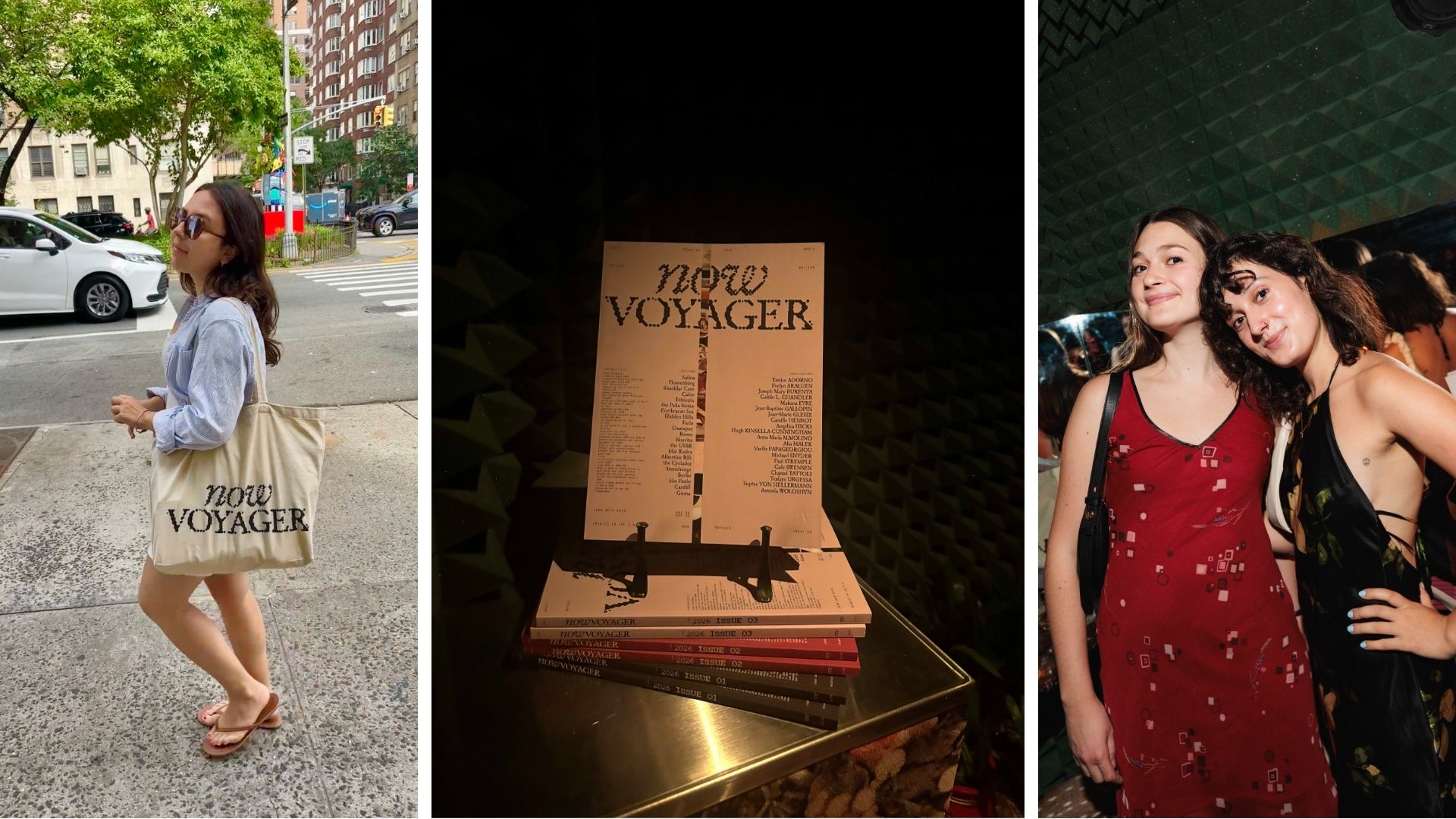
This summer, Frances Brogan ’27 and Lola Horowitz ’28 worked as editorial interns at Now Voyager, a new longform magazine dedicated to international reporting, marking the Program in Journalism’s first-time collaboration with the magazine. Co-founded by Hélène Werner and Nicolas Niarchos, the publication officially launched in March 2026 with its first print issue. Ferris Professor of Journalism in Residence Carolyn Kormann serves as a story editor at the magazine.
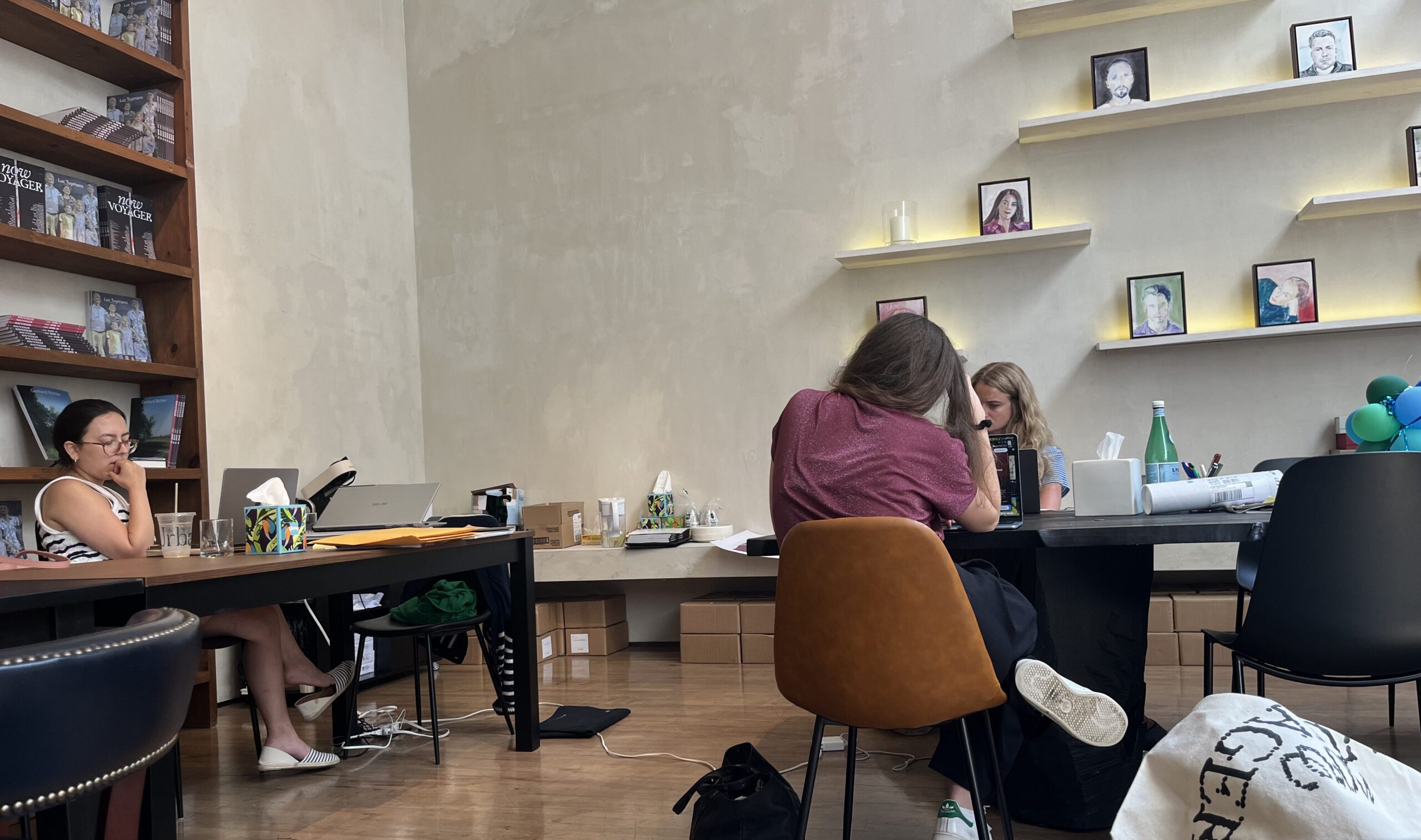
During the eight-week internship, Brogan and Horowitz worked in person from Now Voyager’s Chelsea office in New York City, fact-checked a range of pieces, and reported their own stories alongside seasoned journalists and mentors. Brogan is a history major pursuing minors in journalism and Latin American studies; Horowitz is an English major pursuing minors in journalism and creative writing.
In this Q&A, Brogan and Horowitz reflected on their experiences at the magazine: the memorable assignments, the importance of fact checking, and how the internship restored their faith in the future of journalism.
Describe the work you did this summer.
Frances Brogan: My work primarily consisted of fact-checking upcoming pieces for the magazine, from a meticulously researched excavation of the life of a forgotten abolitionist to a requiem for Sudanese street music. I also wrote and fact-checked global briefings and wrote blurbs for niche cultural events taking place around the globe. I got to soak up, like a sponge, knowledge of the inner workings of a new magazine and the New York media ecosystem, and I learned so much about the world.
Lola Horowitz: Although I was hired officially as a factchecker for the magazine’s fourth issue, my time with Now Voyager was spent sprawled across a range of journalistic roles, and I’m certain that extensiveness is why I grew so much as a writer. On a weekly basis, my work toggled between factchecking (e.g. longform interviews, profile features, and global briefings), editing (e.g. Instagram captions, newsletters, and LinkedIn posts), and occasionally writing (e.g. press releases, story summaries, and news coverage).
What were two memorable projects or assignments that you were a part of?
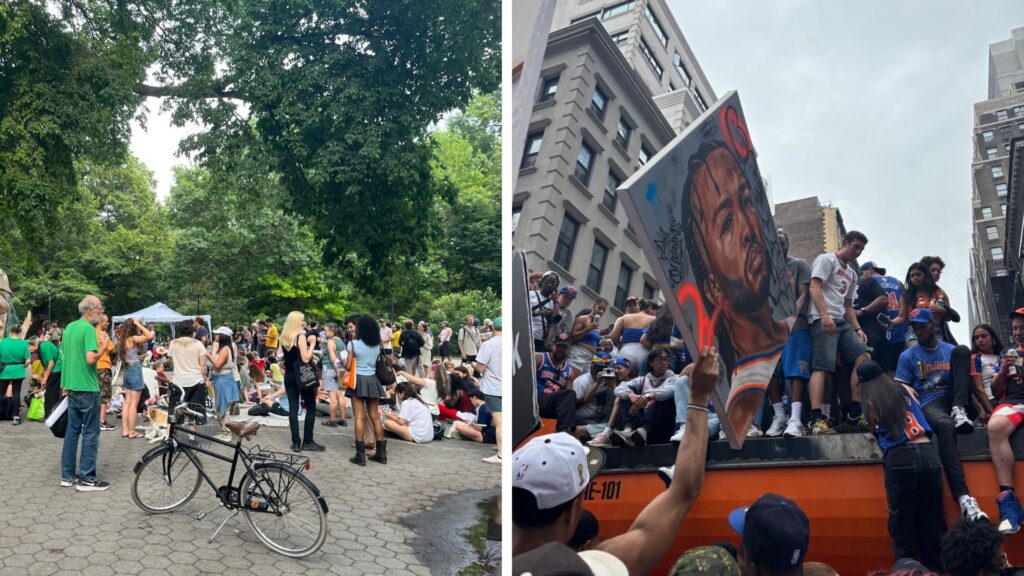
FB: I had the opportunity to pitch, report, and write my own piece for the magazine, trying to uncover what New York City’s Young Republicans actually believe in. I attended a Young Republicans party (alongside the incredible Raphi Gold ’26, who was also interning at Now Voyager). I also helped Raphi report her piece about New York’s luddites, anti-tech young people who eschew phones and modern technology, and we attended several of their gatherings in Tompkins Square Park. The juxtaposition of luddites and Republicans was definitely interesting…Nick, one of the editors-in-chief of Now Voyager, generously edited my article, and helped me learn how to make a piece funny without making fun of its subjects. I also will never forget some of my fact-checking calls with the protagonists of pieces. I read about the unbelievable struggles that Joel Kyaviro, a professional cyclist from the Congo, has endured and then called him – he exuded the same gentleness and irreverent wit as my friends in the U.S. It was a reminder that good journalism emphasizes our common humanity.
LH: A memorable assignment came on my third day on the job, when Now Voyager greenlit my proposal to report on the ground at the Knicks Championship Parade in lower Manhattan. The following morning, at 7:00 a.m., I boarded a packed downtown train bound for Fulton Center, camera dangling from my neck and a voice recorder in hand. Ahead of me lay five hours of interviewing impassioned fans, photographing wild New York scenes, hopping barricades, navigating dense foot traffic, and detailed notetaking. On June 18, I was a real reporter, and I relished every hectic second of it. My reporting, Overheard (Knicks Edition), was published on Now Voyager’s website the following week.
Three days before the end of my internship, another memorable assignment came out of the blue. A Now Voyager correspondent had written a global briefing about the Democratic Republic of the Congo, where a quarantine was underway near Kinshasa involving over two hundred passengers who were aboard a barge with a man believed to have died of the Ebola virus. The magazine wanted the story published before major U.S. news outlets broke the news first, so I spent the rest of the afternoon factchecking a piece whose sources were two documents written entirely in French. When it dawned upon me that I’d have to verify information in a language I didn’t speak, my instinct wasn’t to admit to Hélène that I was unqualified for the assignment, but simply and certainly to tell myself I would learn French. Granted, having two other Romance languages under my belt and access to dictionaries helped me out. By the end of the workday, the global briefing was out of my hands, and I could roughly read the two documents with something close to fluency.
Tell us about something that you learned this summer.
FB: I didn’t expect fact checking to be as fun as it was. I expected grunt work, but instead I got to satisfy my intellectual curiosity by researching niche topics, talked to fascinating people from around the world, and helped shape the final language of pieces. I also learned just how important rigorous fact-checking is – we caught errors in exceptionally well reported pieces.
LH: One thing I learned as a Now Voyager intern and will continue to work on, is navigating the fine line between editing and rewriting. There’s a point where structural and grammatical suggestions overstep the bounds that preserve a writer’s voice and style. Rather than coloring someone else’s writing, a good editor should enhance the color already there.
How do you think that this internship might contribute to your future goals or career plans, in journalism or beyond?
FB: Not to be dramatic but my faith in the future of journalism is restored. Now Voyager demonstrated that longform nonfiction writing isn’t dead, despite what pessimists might tell you. A new magazine actually can thrive in a bleak media environment, people still know how to read, and there is still an appetite for rigorous and compelling long stories about real people.
LH: My internship at Now Voyager has already contributed to my future career as an author of fiction, allowing me to work alongside industry professionals and read gripping stories from journalists who grapple with the same question that motivates my own work: how can we do justice in writing to the idiosyncrasies and nuances of foreign peoples’ everyday lives? Now Voyager has ignited my passion for sailing toward foreign perspectives and charting stories beyond domestic waters. After all, every population has a story worth telling.
Check out the pieces published in Now Voyager by Brogan, Horowitz, and Princeton Journalism alumna, Raphaela Gold ’26:
Luddite Lifestyles
A little revolutionary whimsy for your New York City heatwave?
By Raphaela Gold ’26
Under Siege
What do New York’s young Republicans really believe?
By Frances Brogan ’27
Overheard (Knicks Edition)
Underground and on the ground at the Knicks Championship Parade
By Lola Horowitz ’28